1. A few months ago, a friend and I found (and purchased) lamps like this one at an antiques mall. I am just fascinated with the sheer simplicity and compactness in the form.

    After purchasing the lamp, I became determined to find out who designed this lamp. Sadly, no easy task. The one my friend purchased was built by Tensor (as in this Etsy listing) but the one I purchased, which was of fairly similar design was built by “Consolidated Manufacturing Corporation.”

    A Google search yielded no more information than a couple Etsy listings for similar lamps. Then it hit me — Google Patents! After an hour of following reference after reference, I finally uncovered the closest possible design (and a dead end) in Design patent 214,081:

    While not an exact match, it is exceptionally close. The designer? A Minoru Araki.

    I don’t know where you are now, Minoru, but I thanks for the great lamp design.

    Want a similar one? The seller seems to have another listing on Esty, in an awesome shade of red.

  2. One of several impressive “comic book city” posters done by designer Justin Van Genderen. The halftone dome in this one, though, is a particularly nice touch.

    (Source: 2046design.com)

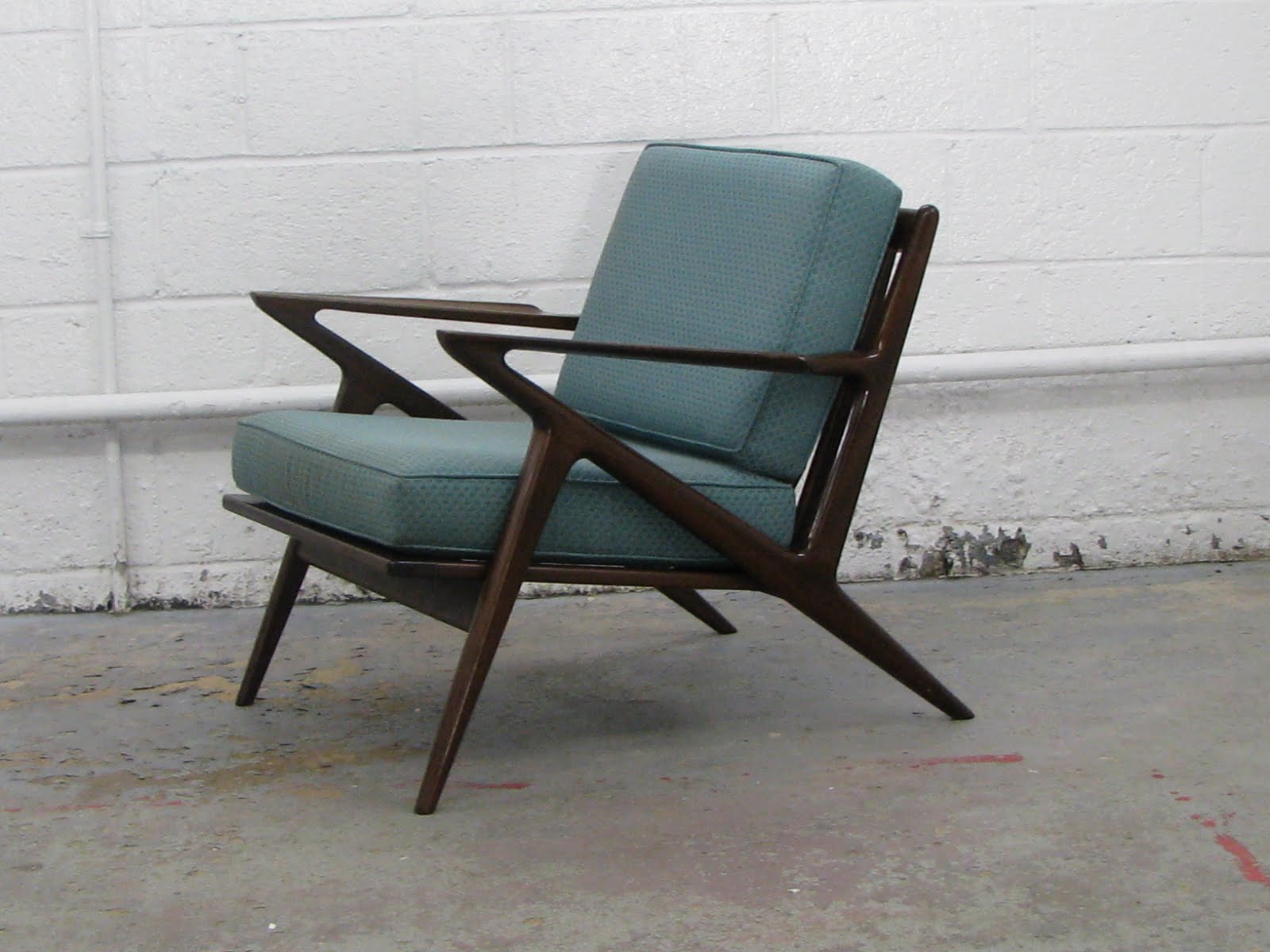
  3. Can you tell what era this Danish Modern Selig Jensen “Z” chair is from? Go ahead, take a wild guess.

    That’s right…circa 1950s. The lines on this chair are so crisp and beautiful; the subtle curve of the armrest tops, the fluid rounded forms of the wood legs. There’s really no way you can’t love it.

    Strangely, though, the designer commonly attributed to this chair, Poul (or Paul) Jensen, doesn’t seem to exist. No mention of him online (outside of this chair design), nor in Google Books, nor in any (US) patents. Could his existence be a complete fabrication? Perhaps.

    Post inspired by this photo from FoundModern.

  4. A republishing of Giambattista Bodoni’s Manuale tipographico (1818). At 1,208 pages, it’s huge, heavy, and beautiful.

  5. Clever pencil from Present&Correct. The built-in (or should I say “cut-in”) clip allows for it to be attached to any pocket or notebook. At $7.40 (USD) per pencil, however, I’m not sure I’d ever want to use it.

  6. Advertisements for the (defunct) Burroughs Corporation. Great use of strong line, color, and shape to express the ideas of complex computation and speed.

    (Source: aisleone.net)

  7. Third edition of a beautiful quarterly design magazine printed in Australia. This is a great use of the grid and the printing looks stunning. If only international shipping wasn’t so expensive.

  8. Fantastically creative book published by MUJI. Each letter in the book can be removed and folded into an animal starting with that letter.